
Should You Fertilize Before or After Rain? (The Complete Guide)
Should You Fertilize Before or After Rain? (The Complete Guide)
Rain and lawn applications are one of the most common questions I get — and honestly, it's one of the most misunderstood topics in DIY lawn care. The short answer: adequate soil moisture is your friend, and applying before a steady rain is usually a great move. But the right call depends on which product you're using and what kind of rain is coming.
Here's everything you need to know — granular fertilizer, liquid fertilizer, prodiamine pre-emergent, herbicides, and more.
🌿 The lawn care reality check: Home lawn care doesn't happen in a controlled environment — it's variable and unpredictable. The weather always wins; it is undefeated. Your job is to make the best educated decision you can with the information available. Trust yourself here.
Why Soil Moisture Matters for Every Application
Before getting into product-specific rules, here's the principle that applies across the board: adequate soil moisture at the time of application is almost always a good thing.
Think about the opposite scenario. If your soil is bone dry, your lawn is stressed. There is no product you'd want to put down on a drought-stressed lawn — water is the first remedy. An actively growing, hydrated lawn absorbs inputs the way it's supposed to. A wilting lawn has essentially closed itself off just trying to survive.
The dictionary defines "wilt" as "to lose turgor from lack of water." That turgor pressure is closely tied to potassium and water — it's why potassium-rich fertilizers matter so much during summer heat. A well-hydrated, actively growing lawn takes in what you're giving it. A stressed, wilting lawn doesn't.
For herbicides specifically, soil moisture is often spelled out right on the label. Always check. As a general rule: if the label calls for soil moisture, honor it.
Watering Before You Fertilize
Should your lawn have some moisture before a fertilizer application? Yes. When you're feeding your lawn, it needs to be properly hydrated to utilize those inputs effectively.
If you're already on a regular watering schedule and getting occasional rain, you're set — no need to do anything different. If your soil is dry, give it a pass with the irrigation before you fertilize. Your lawn will thank you for it.
Not sure how to set up a watering schedule? The tuna can challenge is the easiest way to calibrate your sprinklers and know exactly how much water you're putting down per zone.
Liquid Fertilizer on a Wet Lawn
Good news if you're an early morning applicator: applying liquid fertilizers and bio-stimulants to a dew-covered lawn is completely fine — and often ideal.
Whether you're using a backpack sprayer or a hose-end applicator, lace up your waterproof boots and go spray that wet lawn. The moisture on the blades is not a problem for liquids.
This also applies to the WDG (water-dispersible granule) version of prodiamine when applied as a spray. Applying to a wet lawn isn't required, but it's not a problem either. Once you're done, water it in right away and you're good to go.
Granular Fertilizer on a Wet Lawn
With granular fertilizers, you want to be a bit more careful. When granular prills land on wet grass blades instead of falling through to the soil, they can stick — and that contact can cause tip burn.
Tip burn isn't catastrophic and it's not terribly common, but it's avoidable. If you're fertilizing St. Augustine on a wet morning, you'll likely be fine — many people do it without issues. But if you want to play it safe, apply granular fertilizer to a dry lawn. You'll often find this guidance on the product label as well.
⚠️ Granular rule of thumb: Liquid on a wet lawn = no problem. Granular on a wet lawn = possible tip burn. When in doubt, wait for the blades to dry before spreading granular.
Prodiamine Pre-Emergent and Rain
For granular prodiamine pre-emergent, the same moisture logic applies — you want some soil moisture present, and you definitely want the soil to not be frozen.
If you're following my timing strategies (applying at or above 50°F soil temp), the ground won't be frozen. That's the primary thing to confirm.
Beyond that, soil moisture helps prodiamine activate correctly. Here's how granular prodiamine works: the active ingredient (the powder) is adhered to inert carrier granules. When you water in after applying, you're washing that powder off the granules and down into the soil profile, where it forms a vapor barrier that prevents crabgrass and other grassy weeds from germinating.
If the soil is very dry when you apply, water may run off the surface rather than penetrating — and it can carry product with it. Adequate soil moisture before application helps the water-in phase go as intended.
Want to understand exactly how prodiamine works? Read: How Does Prodiamine Pre-Emergent Work.
Watering In: How Much and How Soon
Most products in a standard lawn program need to be watered in between ¼" and ½" of water after application. Here's the breakdown by product type:
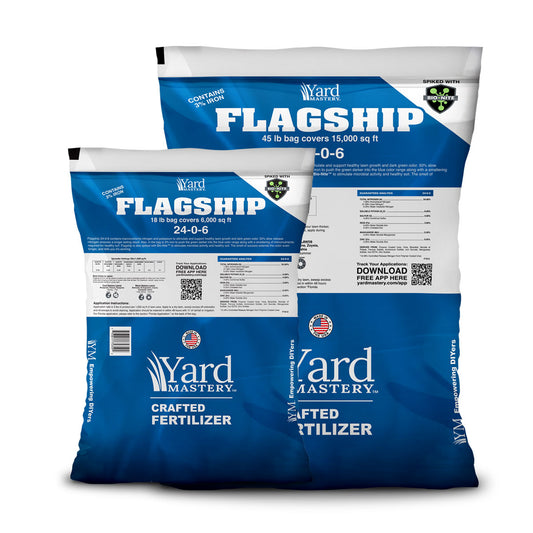
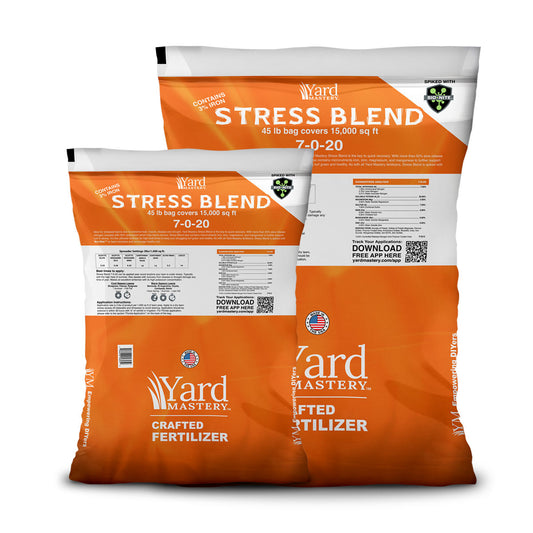
- Yard Mastery granular fertilizers: ¼" of water, within 48 hours
- Granular Prodiamine and Prodiamine 65 WDG: ½" of water, as soon as possible
- Bio-stimulants (liquid): Light watering in; follow product label
The reason you water fertilizers in is to move them into the soil where microbes can break them down and make nutrients available to the plant. Getting them into the soil also reduces the risk of a heavy rain event washing surface-sitting granules into storm drains before they're incorporated.
Does it have to be done in 48 hours?
For fertilizers, the 48-hour window isn't a hard cutoff for safety — it's about results. Granular fertilizer sitting on dry soil isn't doing anything for your lawn. It can sit for a week without damage, but you won't see results until it gets watered in. Morning dew will begin to break some of it down depending on the season, but don't count on that.
Get it watered in. A quarter inch is sufficient. More is fine as long as the soil isn't saturated to the point of runoff.
Why prodiamine watering is more time-sensitive
Prodiamine — as a pre-emergent herbicide — has a tighter urgency around watering in. Two reasons:
- UV degradation: Prolonged sun exposure can degrade the active ingredient sitting on the surface. Get it into the soil.
- Timing window: Pre-emergent is a timed application. If you apply correctly but it sits unwatered for two weeks, you've lost time you can't get back — regardless of whether the sun was a factor.
Applying Before Rain: When It's a Green Light
Here's where it pays to understand your local rain patterns. Timing a fertilizer or pre-emergent application before a steady rain is smart lawn care — free water doing the watering-in work for you.
When I worked for TruGreen in South Chicago in the early 2000s, we had thousands of customers who never ran their irrigation systems. In spring — the rainy season in the Midwest — every single fertilizer application got watered in by natural rain. Those lawns were green and thriving.
The good rain vs. bad rain distinction
Not all rain is the same. You need to know which type is coming:
Good rain (green light to apply): Steady, light rain over several hours. No puddling, no flooding. The kind that gently wakes everything up. If you've ever seen April showers in the Midwest — tulips popping, redbuds blooming, a misty day that feels like the lawn is breathing — that is perfect rain for a recent application.
Bad rain (wait it out): Florida-style summer thunderstorms. One inch in 20 minutes. Pounding, localized, and unpredictable. These storms will wash granular fertilizer right off the surface and into storm drains before it's had a chance to be incorporated. In Florida, summer nitrogen and phosphorus applications are actually regulated because of how severe these rain events are.
The rule is simple:
✅ Steady light rain forecast → apply and let nature water it in
⛈️ Heavy thunderstorms forecast → when in doubt, wait it out
You have one lawn to manage. That's your advantage as a DIYer. Use it.
What If It Rains Very Heavy After You've Applied?
This happens. You apply in the morning, and by afternoon a storm comes through that nobody predicted. Here's what to do: nothing. Do not re-apply.
Think about professional spray companies. They're out applying fertilizer and pre-emergent every single day. Their customers' lawns go through unexpected heavy rain events constantly — and those customers still get great results. The product that got watered in before the heavy rain hit is working. Some surface product may have washed off, but re-applying on top of an uncertain base is not the right move.
There are too many variables — soil type, slope, grass density, time of year, how much rain, how much had already soaked in — for me to tell you definitively that your application was compromised. Most of the time, it's fine.
What you should do:
- Control your controllables. Stick to your program.
- If results are lackluster this round, note it and be more strategic around rain timing on your next application.
- Use the Yard Mastery Lawn Journal App to track applications against weather events. Over time, you'll know exactly how your soil and your local rain patterns interact.
Like an old sailor who's learned the weather patterns on their stretch of water — over time, you'll get better and better at reading your conditions and making smart applications around them.
Frequently Asked Questions
Should you fertilize before or after rain?
Fertilizing before a steady, light rain is generally ideal — the rain waters in your application for free. Avoid applying before heavy thunderstorms, which can wash surface granules off the lawn before they're incorporated. For granular fertilizer, aim for a light-to-moderate rain forecast. For liquid fertilizer, rain within an hour or two is fine.
Can you fertilize in the rain?
For liquid fertilizers and bio-stimulants, applying in light rain or on a wet lawn is completely fine. For granular fertilizers, wet grass blades can cause prills to stick to the leaf surface and potentially cause tip burn. When using granular products, wait for the blades to dry before applying if possible.
Can you put granular fertilizer on wet grass?
You can, but there's a small risk of tip burn if granular prills stick to wet blades instead of falling through to the soil. It's not catastrophic and doesn't happen often, but to be safe, apply granular fertilizer to dry grass blades. Wet soil (as opposed to wet blades) is fine and even beneficial.
How long should fertilizer be down before it rains?
There's no required wait time before rain for most granular fertilizers — in fact, rain can be beneficial. The concern is heavy, pounding rain that runs off before the product can be incorporated. Light-to-moderate rain shortly after application is ideal. If a severe storm is forecast, wait until after it passes to apply.
Should you water after fertilizing?
Yes. Granular fertilizers should be watered in with approximately ¼" of water within 48 hours. Prodiamine pre-emergent needs ½" and should be watered in as soon as possible. Watering moves the active ingredients into the soil where they can work — surface product sitting on dry soil isn't benefiting your lawn.
Did my fertilizer wash away in the rain?
Possibly some, but probably less than you think. Professional lawn care companies deal with unexpected heavy rain constantly and still get great results. Do not re-apply on top of an uncertain base. Stick to your program, note the event in your lawn journal, and use it to calibrate future timing decisions around weather.
Can I apply prodiamine pre-emergent before rain?
Yes — applying granular prodiamine before a steady rain is a smart move. The rain does the watering-in work for you. Avoid applying before a heavy storm that could cause runoff before the product is incorporated. Light-to-moderate rain after application is ideal for getting prodiamine into the soil profile where it forms its protective vapor barrier.
Track every application — rain and all.
The Yard Mastery Lawn Journal App lets you log applications, weather events, and results so you can look back and know exactly why a round worked — or didn't. Over time, that data is worth more than any single application decision.
Now go Throw It Down. I'll see you in the lawn. — AL